7 Ways a Waterfront Corporate Retreat Increases Annual ROI
In the world of high-level business management, “Return on Investment” (ROI) is often viewed through the narrow lens of spreadsheets, software subscriptions, and hardware upgrades. However, savvy executives are increasingly recognizing that the most significant variable in the ROI equation isn’t technology-it is human capital. As the corporate world shifts toward hybrid models and digital-first communication, the “soft” costs of disengagement, employee turnover, and creative stagnation are skyrocketing.
A waterfront corporate retreat is often dismissed by traditionalists as a luxury or a “party.” In reality, moving a team from a sterile boardroom to the dynamic environment of the open water is a strategic financial move. By investing in a high-impact off-site experience, companies can see a direct correlation in their bottom line. Here are seven ways a waterfront retreat increases annual ROI.
1. Drastic Reduction in Turnover Costs
The cost of replacing a mid-level employee is estimated to be 1.5 to 2 times their annual salary when accounting for recruitment, onboarding, and lost productivity. High turnover is an ROI killer. Waterfront retreats serve as a powerful retention tool by fostering a sense of belonging and “perceived organizational support.” When employees feel that their company invests in their well-being and provides high-quality social experiences, their emotional commitment to the firm increases. A single afternoon on the water can do more for long-term retention than a minor cost-of-living raise.
2. Accelerated Cross-Departmental Collaboration
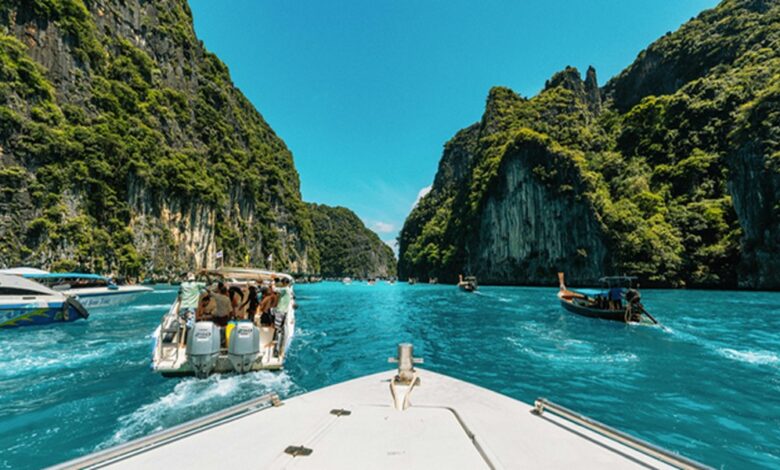
Silos are the enemy of efficiency. When the marketing team doesn’t speak to the engineering team, projects stall and mistakes multiply. In an office setting, people tend to stick to their designated zones. On a boat or at a waterfront venue, those physical silos disappear. The relaxed atmosphere of a party boat corporate event allows for “cross-pollination” of ideas. A casual conversation between a salesperson and a product developer over a drink can lead to a breakthrough insight that saves months of misguided development time. This increased “internal networking” efficiency has a direct impact on project speed and accuracy.
3. The “Blue Mind” Productivity Boost
Marine biologist Wallace J. Nichols coined the term “Blue Mind” to describe the mildly meditative state humans enter when they are near, in, on, or under water. Science shows that being near water lowers cortisol (the stress hormone) and increases dopamine. High stress is a primary driver of absenteeism and “presenteeism” (being at work but not being productive). By providing a waterfront “reset,” companies effectively clear the mental clutter of their staff. A refreshed brain is a faster, more accurate brain, leading to a surge in post-retreat output that far outweighs the cost of the excursion.
4. Strengthening Brand Advocacy from Within
Your employees are your most important brand ambassadors. In the age of LinkedIn and Glassdoor, the internal “vibe” of a company is public knowledge. When employees post photos of a spectacular sunset cruise or a high-end waterfront dinner, they are inadvertently helping with recruitment and business development. This organic “employer branding” lowers the cost of future talent acquisition. Top-tier talent wants to work for companies that offer a vibrant culture, and a waterfront retreat is a highly visible signal of a healthy, prosperous corporate environment.
5. Higher Quality “Deep Work” and Innovation
The best ideas rarely happen under fluorescent lights. Innovation requires a break from the “default mode” of the brain. By changing the physical environment to something as radical as the open sea, you force the brain out of its habitual patterns. This environmental shift often leads to “Eureka” moments. Many companies find that a strategic planning session held on a private vessel yields more actionable, creative solutions in 90 minutes than a week of circular meetings in a windowless conference room.
6. Mitigation of Remote-Work “Isolation Friction”
Remote and hybrid work models save companies money on real estate, but they introduce “isolation friction”-the slowing down of processes because people don’t know each other well enough to communicate quickly and clearly. A waterfront retreat acts as a high-density “social lubricant.” It builds the social capital necessary for remote teams to function smoothly. When people have laughed together on a boat, they are more likely to be patient and helpful over Slack and email, reducing the friction that slows down daily operations.
7. Strategic Client Relationship ROI
If the retreat includes key clients or stakeholders, the ROI is even more direct. Traditional golf outings or dinners are predictable. A private maritime excursion is memorable. The privacy of a chartered vessel provides a secure environment for high-level negotiations, while the “top-shelf” nature of the experience builds immense goodwill. It is much harder for a competitor to steal a client who has shared a unique, exclusive experience on the water with your leadership team.
Calculating the ROI of a waterfront corporate retreat requires looking beyond the immediate invoice. When you factor in the thousands of dollars saved on recruitment, the hours gained through improved communication, and the revenue generated by fresh innovations, the “cost” of the event begins to look like a bargain. In 2026, the companies that will lead their industries are the ones that understand that a happy, connected, and rested workforce is the ultimate competitive advantage. Taking the team to the water isn’t just a day off-it’s a leap forward.